


Wix Design Patterns That Convert in 2026 — Beyond the Template Look
The Wix Studio design patterns that consistently convert in 2026 — editorial type, asymmetric grids, considered motion, and the trends we are deliberately ignoring.
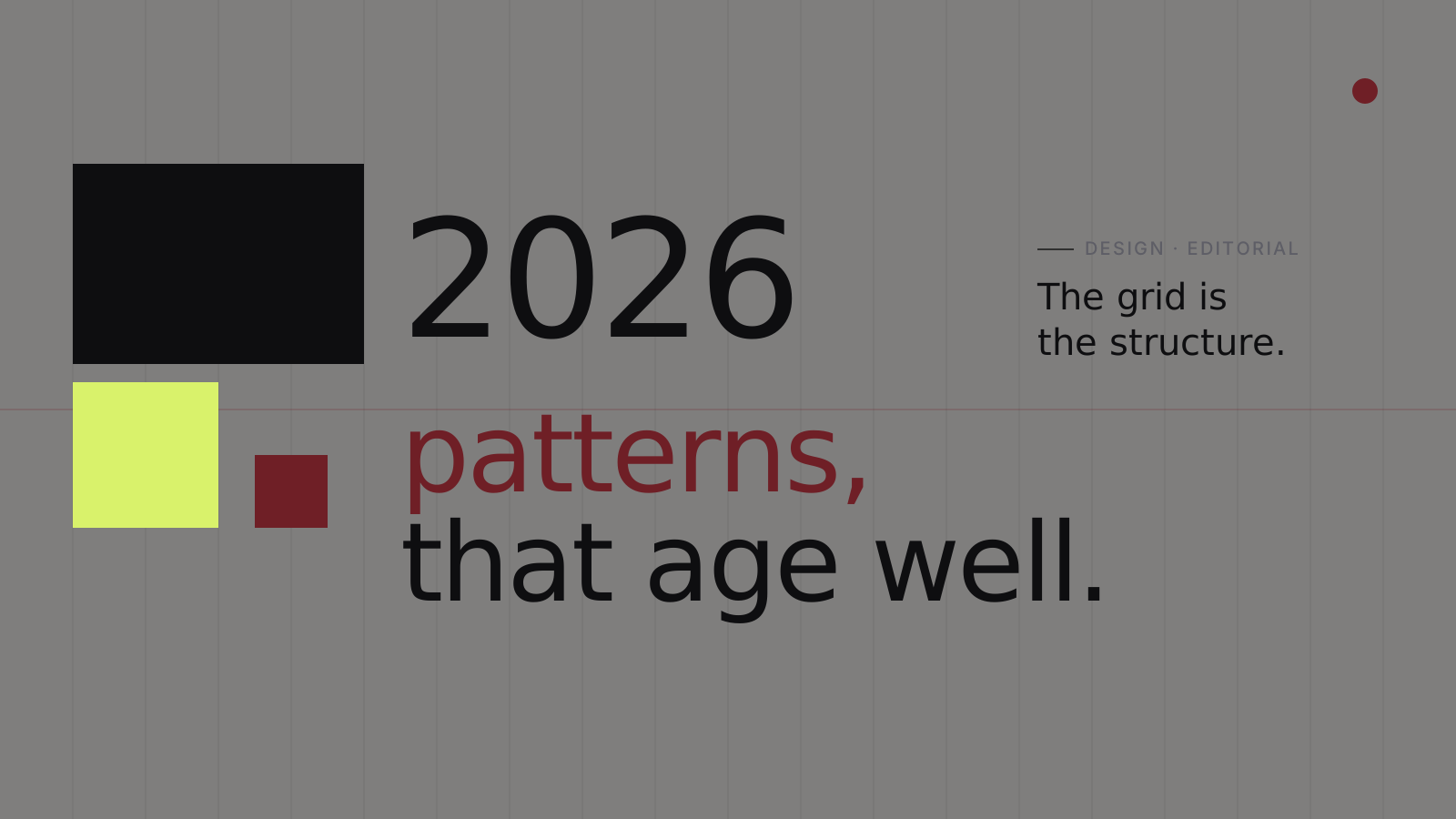
The fastest way to spot a Wix Studio site that took itself seriously: it does not look like any other Wix site. The patterns below are what we use across most projects to make Studio sites feel custom-built — because at this level of discipline, they are.
Editorial typography pairings
The single biggest visual upgrade: a confident type pairing. We default to:
- A display serif with character (Fraunces, Tiempos, Source Serif). Variable fonts so weight can shift mid-headline.
- A grotesk for UI (Inter, Söhne, Manrope, Untitled Sans). One face, multiple weights.
- Optional mono for captions and code.
No "use one safe sans for everything." That is the template look.
Asymmetric grids, intentionally
12-column grid, but never every section centered. Hero anchored to columns 1-7 with rail on 9-12. Next section anchored to columns 6-12 with floating side notes. The eye gets variety; the brand reads as considered.
Symmetry is a 2010s default. Asymmetric anchoring with strong vertical rhythm is the 2026 move.
Restrained colour with deliberate accents
Most successful 2026 sites use four colours total:
- Background (paper, ivory, off-white, or near-black for dark).
- Ink (the text colour, near-black or near-white).
- One primary accent (used for emphasis and primary CTAs).
- One surprise accent (used 1-2 times per page maximum).
Avoid the rainbow palette. Avoid the dark-mode-with-neon look — it dates fast.
Considered motion, not decorative motion
Motion exists to clarify, not to entertain. The motion patterns that age well:
- Hover/focus state transitions on interactive elements.
- Entry animation on first scroll into view (subtle translate + fade, ≤400ms).
- Marquee for value-prop ribbons.
- Number tickers on stats.
The motion patterns that date fast:
- Scroll-jacking.
- Parallax that breaks scroll predictability.
- Animated SVG illustrations on every section.
- Floating custom cursors.
Real photography or considered illustration, no AI blobs
The biggest "tell" of a 2025-era Wix site: AI-generated 3D blobs or metaballs as decoration. They date instantly.
Real photography (commissioned or licensed thoughtfully), considered illustration, or strong typography carrying its own weight — those age. We commission photography on most projects above a certain budget; we license carefully where we don't.
Hero patterns that work
Three hero patterns we use repeatedly:
- Display-led — big editorial type, no image. Works for confident brands.
- Split — type left, single strong image right. Works for product brands.
- Editorial spread — type interleaved with images in a magazine-spread layout. Works for content brands.
The hero pattern we avoid: full-width hero image with a centered overlay headline. It's the most common pattern and the most generic.
CTA hierarchy
Two CTAs per primary section, no more:
- One primary (filled, oxblood or brand colour).
- One secondary (link with arrow, no fill).
CTAs compete; more than two reduces conversion on each. The primary CTA color stays consistent across the site so visitors learn it.
Trust signal placement
Behavioural-science best practice — and our own A/B tests — say trust signals belong above the fold on the homepage and immediately under the buy button on product pages. The most undervalued trust signal: a single star rating with review count. Cheap, hard-to-fake, conversion-positive.
Things we deliberately avoid in 2026
- Bento-box grids stuffed with feature tiles. Overused.
- Glassmorphism blur cards everywhere. Date fast.
- Generic dark-mode + neon hero washes. Overused.
- Brutalist-but-not-really stick fonts on pastel backgrounds. Trend has crested.
- Generic "Awwwards-site" floating cursor + marquee text. Cliché.
What we lean into
- Confident editorial type with variable-font axes used for expressive headlines.
- Real grid systems with intentional asymmetry.
- Subtle noise textures instead of gradients.
- Considered margin systems — vertical rhythm tighter than most sites use.
- One memorable detail per page — a stroke under a key word, a number ticker, a typographic move that earns a second look.
The takeaway
A Wix Studio site that converts and earns respect is not a stylistic problem. It is a discipline problem. Pick a strong type pair, pick a restrained palette, pick a grid with intent, motion with restraint. Avoid the trend traps. The platform will reward you.